





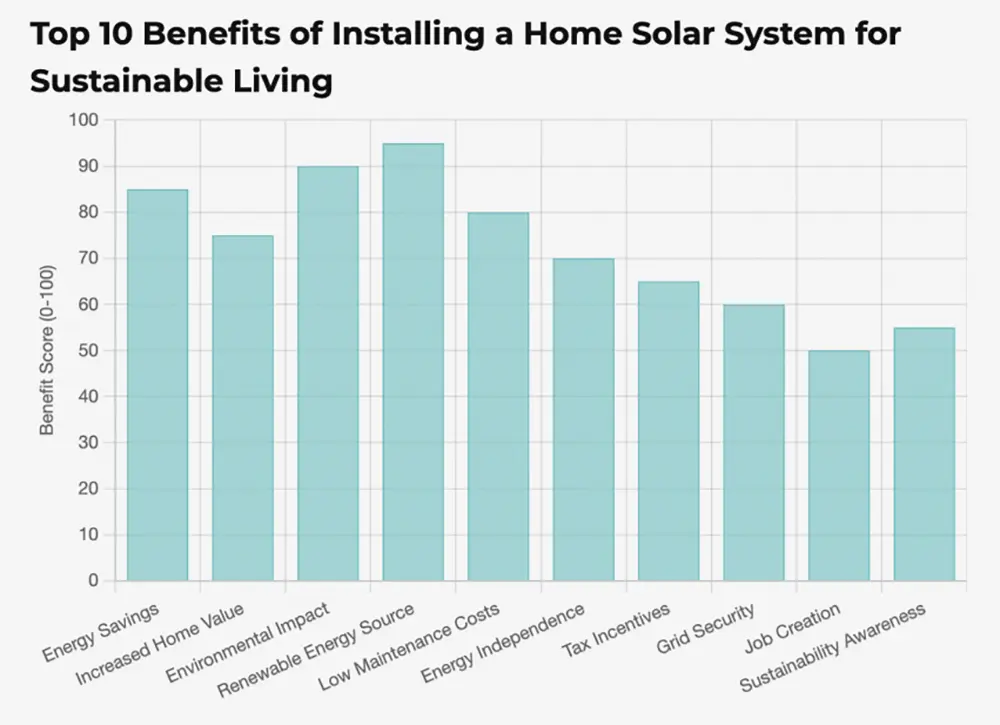
Top 6 Benefits of Installing a Home Solar System for Sustainable Living
Today, sustainable living is no longer just a passing trend but an increasingly important choice for many. Homeowners are actively exploring smart and eco-friendly energy solutions that not only effectively protect our planet but also deliver significant long-term cost savings.
Installing a home solar system is an excellent way to embrace green living. By harnessing the sun's energy, it generates clean, renewable power while reducing reliance on traditional energy sources. This represents not only care for Mother Earth but also a wise approach to life. Choosing solar power means contributing to the environment and future generations while reaping financial rewards.
Save money by reducing energy bills
Installing a home solar system is a wise investment with long-term value, particularly as it helps households save money by significantly reducing energy bills. Against a backdrop of rising energy costs, more homeowners are seeking solutions to lower expenses. Solar panels not only effectively reduce electricity expenses but can also be combined with home battery storage and time-of-use electricity rates. Reports indicate that such a combination can save households up to £255 annually. These savings not only ease financial burdens but also enhance a home's energy independence.
The benefits of solar extend far beyond utility savings. By adopting solar energy, homeowners can substantially increase their property's market value while accelerating the investment payback period. From an environmental perspective, solar is undeniably a vital component of sustainable living; from an economic standpoint, it represents a strategic investment decision. With robust support from financial incentives and energy efficiency policies, now is the perfect time to embrace solar and reap both economic and environmental rewards.
Solar installations increase property value
Installing a home solar system not only supports sustainable living but also significantly boosts property value. Today, an increasing number of homebuyers favor properties equipped with solar installations, viewing them as long-term investments that deliver both environmental benefits and financial returns. The ongoing savings on energy costs, combined with potential tax credits and policy incentives, make solar installations highly cost-effective for households. In many markets, homes with solar panels command significantly higher prices than comparable properties without them, reflecting the growing demand for renewable energy.
Simultaneously, solar installations enhance a property's resale competitiveness. As environmental awareness becomes widespread, buyers increasingly value a home's eco-friendly credentials. Properties with solar systems often highlight energy efficiency and low-maintenance operation as key selling points, clearly demonstrating a commitment to sustainable practices. This trend clearly indicates that homeowners investing in solar technology not only enjoy immediate savings on energy bills but also reap substantial returns on investment should they choose to sell their property in the future.
The Environmental Impact of Solar Energy on Carbon Footprint
Solar energy holds profound and multifaceted significance in reducing carbon footprints and environmental impacts. By harnessing solar power generation, households can substantially decrease their reliance on fossil fuels—the primary source of greenhouse gas emissions. Through this transition to clean energy, families not only produce clean electricity but also significantly reduce their demand for coal, oil, and natural gas, thereby effectively lowering overall carbon emissions associated with energy consumption.
Simultaneously, the adoption of solar systems provides crucial support for sustainable lifestyles. By generating their own electricity, households not only lower monthly utility bills but also substantially reduce their personal carbon footprint, making tangible contributions to environmental protection. This shift toward renewable energy strengthens collective global action against climate change while highlighting the critical role of individual power in addressing environmental challenges. As more households adopt solar installations, these cumulative effects will substantially reduce carbon emissions across entire communities. Ultimately, this green choice creates cleaner air and a healthier planet for future generations, propelling us toward a more sustainable future.

Homeowners achieve energy independence
Achieving energy independence is a significant advantage of installing a home solar system. By reducing reliance on traditional energy sources and utility providers, homeowners not only save substantial costs but also gain greater control over their energy usage. Through solar power generation, homeowners can produce their own electricity, significantly lowering monthly utility bills while effectively mitigating the financial burden caused by energy price fluctuations.
At Jiangsu Yuxin New Energy Group Co., Ltd., we deeply understand the critical importance of energy independence for both residential and commercial enterprises. As an industry pioneer in photovoltaics and energy storage, we deliver comprehensive, customized solutions to help clients maximize the return on their solar system investment. From expert consultation and design to precision installation and attentive maintenance, our team provides end-to-end support, ensuring exceptional system efficiency and long-term reliability. By empowering more communities to embrace a renewable energy future, we not only advance sustainable living practices but also deliver genuine energy autonomy to our clients.
Low maintenance requirements for solar systems
One major appeal of residential solar systems lies in their extremely low maintenance requirements. Compared to traditional energy sources, solar systems operate more simply and efficiently, eliminating the need for frequent fuel replacements or complex mechanical operations. Once installed, solar panels are virtually self-sufficient, requiring only minimal upkeep. Occasional cleaning and inspection—such as removing dust, leaves, or other debris—ensures optimal performance. Typically, a few simple cleanings per year fully satisfy maintenance needs.
Beyond this, solar systems are renowned for their high reliability, providing homeowners with a long-lasting, stable energy supply. Most solar panels come with extended warranties of 20 to 25 years, meaning that after the initial investment, ongoing costs are significantly lower than traditional energy sources. Furthermore, solar technology delivers exceptional durability, operating reliably even in extreme weather conditions with minimal intervention. For those pursuing a minimalist and sustainable lifestyle, it offers a worry-free, convenient energy solution that enhances long-term eco-friendly living.
Take advantage of government incentives and rebates for solar panels
Installing a home solar system is not only an act of environmental stewardship but also a financially savvy choice, especially with governments offering various incentives and rebates that significantly lower the barrier to entry for solar investments. Many states reduce upfront costs for solar panel installations through tax credits, making it easier for homeowners to participate. Simultaneously, some utility companies offer rebate programs that substantially cut overall expenses. Thoroughly understanding and leveraging these incentive policies is crucial for maximizing the long-term returns on your solar investment.
To fully capitalize on government incentives, several recommendations are worth considering. First, actively research relevant federal and state programs, such as platforms like the Database of State Incentives and Resources (DSIRE), which provides detailed information on locally available incentives. Additionally, consulting professional solar advisors is a wise move. They can help develop clear financial strategies and identify potential savings opportunities. Finally, stay vigilant about policy changes to ensure you seize favorable opportunities before incentives expire. By integrating these recommendations, your solar investment will become more efficient and economical while contributing to environmental protection.