





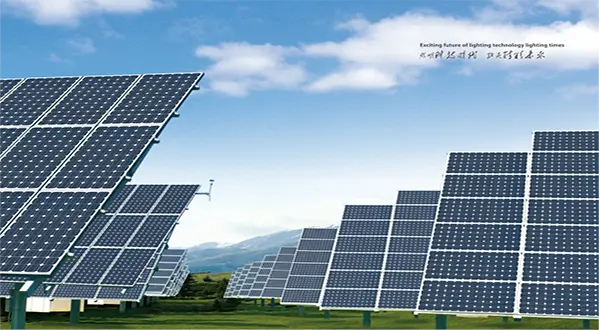
Photovoltaic Industry Transformation: Cost Drops To $0.01
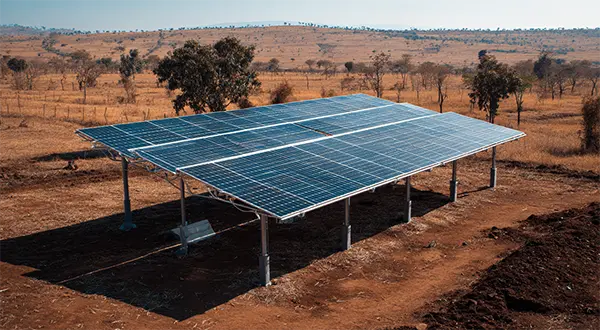
The global solar industry is ushering in unprecedented development opportunities. The International Energy Agency (IEA) predicts that the global PV new installed capacity will exceed 450GW in 2024, accounting for more than 60% of the new installed capacity of renewable energy. Technological progress and cost reduction is the core driving force, PV module prices fell by more than 80% in ten years, polysilicon prices stabilized at 15-20 USD/kg, promoting the acceleration of grid parity. High-efficiency battery technology continues to break through, TOPCon and HJT battery mass production efficiency of 25%, calomel stack technology laboratory efficiency is close to 33%, is expected to enter the commercialization stage in 2025. Application scenarios accelerate the diversification of distributed PV (household, industrial and commercial rooftop) accounted for a significant increase in China's distributed installed capacity for the first time in 2023 over the centralized, the Middle East and Africa rely on the “desert photovoltaic” project to develop emerging markets.
Domestic and foreign policies continue to increase, injecting strong kinetic energy into the industry. China's “dual-carbon” strategy makes clear that in 2030, the total installed capacity of wind and light will be increased to 1200GW, with PV accounting for more than 60% of the total, and distributed pilots will cover 676 counties, with the volume of green power trading increasing by 50% annually. The U.S. Inflation Reduction Act puts $369 billion into subsidizing clean energy, and plans to reach 50GW/year of local PV production capacity in 2024; the European Union has adopted the “REPowerEU” plan to raise the PV target to 600GW in 2030, and legislates to force new buildings to install solar roofs. India through 40% high tariffs to promote local manufacturing, the goal of 2026 production capacity of 100GW, Southeast Asia has become a global supply chain transfer hotspot, attracting LONGi, JinkoSolar and other enterprises layout plant.
Industry challenges and opportunities coexist. Supply chain fluctuations and trade barriers have become the focus, polysilicon overcapacity leads to price fluctuations, the U.S. sanctions against China to force the industry chain to Southeast Asia transfer; the EU “carbon border tax” requires PV exports to attach carbon emissions data, low-carbon technology has become the key to competition. Technological innovation continues to break through, China's Qinghai, Australia pilot “photovoltaic hydrogen”, green hydrogen cost is expected to drop to 2 U.S. dollars / kg; AI operation and maintenance and intelligent tracking system to improve power generation efficiency by 15% -20%. In terms of social value, Africa's “microgrid” project has benefited 600 million people without electricity, and Dubai and Singapore are exploring the integration of photovoltaic buildings to promote the construction of “zero-carbon cities”.
In the future, the solar industry will accelerate from “policy-driven” to “technology + market” double engine, is expected to 2025 PV power cost down to 0.01 U.S. dollars / kWh. Enterprises need to focus on high-efficiency technology R&D, supply chain resilience and ESG practices to meet the opportunities and challenges of the carbon neutral era. PV is not only the core of the energy revolution, but also the cornerstone of global sustainable development, and its development will profoundly reshape the future energy landscape and socio-economic ecology.